Showing posts with label Abortion. Show all posts

Sunday, November 6, 2022

MUST CHRISTIANS OPPOSE ABORTION?

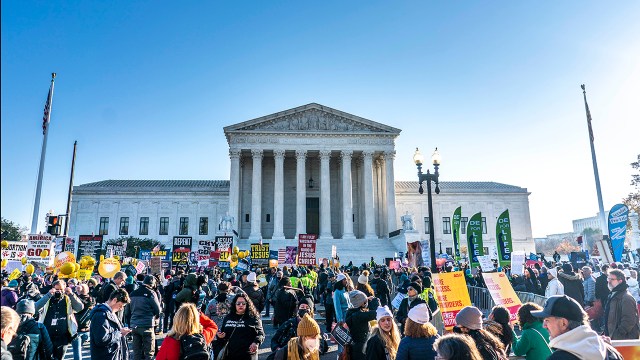
Protest at the U.S. Supreme Court 2022
 

Guest post by Dr. John Messerly, author of the blog Reason and Meaning: Philosophical Reflections on Life, Death, and the Meaning of Life.  Printed here with permission.


Must Christians Oppose Abortions?
 Most professional philosophers do not find abortion morally problematic. Still, many Christians believe they must oppose abortion on religious grounds. But must they? Does such opposition really derive from Christian Scripture or church tradition? 

Religious scriptures are problematic for multiple reasons. Typically they survived as oral traditions before being written down, have been translated multiple times, and are open to multiple interpretations. If you think that stories remained unchanged as they are handed down over time, that translations are precise, or that interpretation is straightforward, then you are mistaken. Moreover, Christian scripture doesn’t discuss most contemporary moral issues. For example, consider the Bible's silence about moral issues surrounding topics such as genetic engineering, artificial intelligence, robotics, climate change, and more. 

Furthermore, the issue of abortion doesn’t arise in the Christian scriptures except tangentially. There are a few Biblical passages quoted by conservatives to support the anti-abortion position, the most well-known is in Jeremiah: “Before I formed you in the womb I knew you, and before you were born I consecrated you.” But, as anyone who has examined this passage knows, the sanctity of fetal life isn’t being discussed here. Rather, Jeremiah is asserting his authority as a prophet. 

Many other Biblical passages point to the more liberal view of abortion. Three times in the Bible (Genesis 38:24; Leviticus 21:9; Deuteronomy 22:20–21) the death penalty is recommended for women who have sex out-of-wedlock, even though killing the women would kill their fetuses. In Exodus 21 God prescribes death as the penalty for murder, whereas the penalty for causing a woman to miscarry is only a fine. In the Old Testament, the fetus doesn’t seem to have personhood status, and the New Testament says nothing about abortion at all. There simply isn’t a strong scriptural tradition in Christianity against abortion.

And Church tradition is ambiguous concerning abortion as the history of the Catholic view shows. In the 13th century, the philosopher St. Thomas Aquinas argued that the soul enters the body when the zygote has a human shape. This position was officially accepted by the church at the Council of Vienne in 1312. Given what we now know about fetal development---that embryos start out as a cluster of cells and human form comes later---if the Catholic Church’s position remained consistent with the views of Aquinas, they should say that the soul doesn’t enter the zygote for at least a few months after conception. However, other Christian theologians would later argue that the soul enters the body a few days after conception, although we don’t exactly know why they believed this. (Note that there really is no moment of conception---it is about a 48-hour process.) Put simply, Church tradition doesn't speak unequivocally about when souls enter newly fertilized eggs. 

So the anti-abortion position doesn’t clearly follow from either Christian scripture or church tradition. Instead, people already have moral views, and they then look to their religion for support. In other words, moral convictions aren’t usually derived from scripture or church tradition so much as superimposed on them. (For example, American Christians used the Bible to both support and oppose slavery.) But even if the pro-life position did follow from a religious tradition, that would only be relevant for religious believers. For the rest of us, and for many religious believers too, the best way to adjudicate our disputes without resorting to violence is to conscientiously examine the arguments for and against moral propositions by shining the light of reason upon them. Having done this the majority of ethicists have concluded that abortion isn’t generally morally problematic.

It also clearly follows that religious believers have no right to impose their views upon the rest of us. In a morally pluralistic society, informed by the ethos of the Enlightenment, we should reject theocracy. We ought to allow people to follow their conscience in moral matters—you can drink alcohol—as long as others aren’t harmed—you shouldn’t drink and drive. In the philosophy of law, this is known as the harm principle. Now if rational argumentation did support the view that a zygote is a full person, then we might have reason to outlaw abortion, inasmuch as abortion would harm another person. (I say might because the fact that something is a person doesn’t necessarily imply that’s it wrong to kill it, as defenders of war, self-defense, and capital punishment claim.)

But for now, the received view among ethicists is that the pro-life arguments fail, primarily because the fetus satisfies few if any of the necessary and sufficient conditions for personhood. The impartial view, backed by contemporary biology and philosophical argumentation, is that a zygote is a potential person. That doesn’t mean it has no moral significance, but it does mean that it has less significance than an actual person. An acorn may become an oak tree, but an oak tree it is not. You may believe that your God puts souls into newly fertilized eggs, thereby granting them full personhood, but that is a religious belief that isn’t grounded in science or philosophical ethics. It also isn't grounded unequivocally in Christian scripture or Church tradition. 

Subscribe to our monthly Philosophy Newsletter and get a Free copy of Understanding Philosophy: The Smart Student's Guide to Reading and Writing Philosophy


Sunday, July 10, 2022

ABORTING A HUMAN EMBRYO IS NOT MURDER


Subscribe to our monthly Philosophy Newsletter and get a Free copy of Understanding Philosophy: The Smart Student's Guide to Reading and Writing Philosophy


The nonsensical idea of a natural right

At this writing, the U.S. Supreme Court has removed a constitutional right: the right of a woman to to have an abortion in the first trimester of her pregnancy.  From now on, it will be up to the states to decide whether women should be allowed to abort a fetus under certain conditions or not at all.  

In some states the legislature might decide to treat all abortions as murder. Punishment of a woman for aborting a fetus at any stage of her pregnancy will be prosecuted and punished the same as if she had killed her newborn child.   The argument goes like this: If it is murder to kill a child, then it must also be murder to kill what pro-life advocates call an “unborn child,” or what scientists call a zygote, embryo, or fetus.  At every stage of pregnancy, from fertilization to birth, it is contended that the human fetus has the right to life.  Since abortion (killing the fetus) is an intentional violation of the right to life, it follows that abortion must be treated as an act of murder.

Suppose that a woman takes a pill that aborts (kills) the human embryo within her body.  If abortion is murder, then the logical implication is that the embryo has the right to life at the very moment of conceptionBut there is no evidence, no valid argument for this conclusion.  To say "The embryo is human" does not logically imply "The embryo has the right to life."  To put it another way, there is no contradiction in saying "It is a human enbryo but it has no does not have the right to life."  Having human DNA no more gives it the right to life than having feline DNA gives my cat the right to life.

How does any being, including a human being acquire the right to life?   When we say that a being of any kind (human, dog, cat, horse) has a right to life, we mean that it has a valid claim on society to protect its life from those who might attempt to kill or harm them.   A right or valid claim for social or legal protection comes into existence when society finds that the social consequences of giving protection are better than the social consequences of not giving protection.

The same argument applies to the right of bodily autonomy, understood in this context as the right of a woman to make her own abortion decisions without interference by others.   Women do not have this right by nature.  They are not born with the right to bodily autonomy.  There is no contradiction in saying "The human embryo does not have right to bodily autonomy when she becomes pregnant."

How does a woman acquire the right to make her own decisions about abortion?  In the same way that an embryo acquires the right to life.  If she has the right to abortion, then she has a valid claim against society to protect her from physical interference.  The 1973 Supreme Court decision (Roe v Wade) gave her that right (made her claim valid) but prior to 1973 she had no valid claim to protection from state interference.  There were few states that granted a right to abortion at any stage of pregnancy.

We do not know whether the social consequences of protecting any particular  embryo from abortion will be good or bad. A lot depends on the mental and physical health of the child, the social environment in which the child is born, and the effect of pregnancy on the woman.

But there is a lot we know about the bad consequences of forcing a young woman to continue her pregnancy for nine months until birth: her loss of liberty,  loss of education, loss of a job, loss of friends and social opportunities that she should otherwise enjoy.  The bad consequences of forced pregnancy are usually much worse than any good consequences. Therefore, women have a valid claim on society to protect it from government interference. If there is a valid claim, then by definition, there is right to bodily autonomy.  If there is a right to bodily autonomy, then aborting an embryo cannot be murder.

There is no mention of “natural rights” in this argument. The very idea of a natural right is nonsense.  Let me put it this way.  The concept of “a right” is not to be found in the concept of any kind of animal, including the human animal.  It is not a contradiction to say, “Nancy is a hen but hens do not have the right to life.”  Similarly, it is not a contradiction to say, “Marilyn is human but Marilyn does not have the right to life.”  We can imagine circumstances in which this is true, for example, Marilyn is a slave and is the property of her master who has the right to sell or kill her. 

The word “natural” is the opposite of “conventional.”   Natural rights are falsely said to exist in humans (and only in humans) as an essential element without which they would not be human.  But this is where the nonsense cones in.   What makes a being human is that they are born with a specific DNA that can be confirmed to exist by laboratory tests.  But there are no lab tests, observations or experiments that would be evidence for the existence of rights in human beings.   If humans have rights of any kind, including the right to life, it is only because rights are conventional.  Rights are the product of social mores and human-made law.  Without rules that humans create and enforce, we would have no rights at all.

Saturday, July 9, 2022

THE U.S. SUPREME COURT AND THE POLITICS OF ABORTION


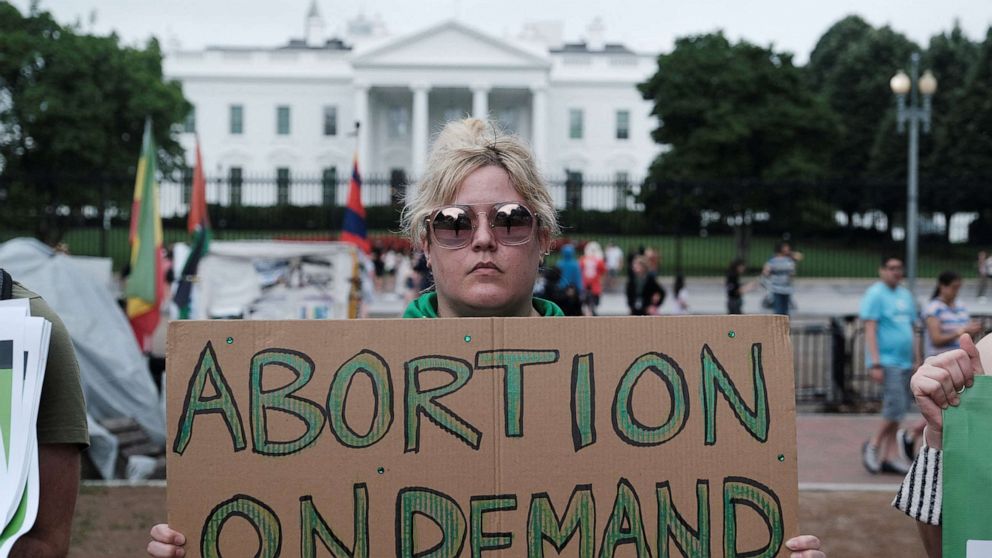
PHOTO: A Women's March activist attends a protest in the wake of the U.S. Supreme Court's decision to overturn the landmark Roe v. Wade abortion decision, in Washington, D.C., July 9, 2022. 
 
Subscribe to our monthly Philosophy Newsletter and get a Free copy of Understanding Philosophy: The Smart Student's Guide to Reading and Writing Philosophy
 
 
I am writing this on the day of a huge protest at the White House demanding action by the president to do more to help women whose right to abortion has been taken away by the US Supreme Court. President Biden said that the Court's decision to overturn Roe v Wade was a "political" decision that can only be reversed by appointing liberal justices to the Court or by electing liberal senators who will vote to codify Roe v. Wade. In other words, we should make another political decision about abortion by replacing pro-life justices with pro-choice justices. 
 
When it is said a decision was made "for political reasons," we usually take this to mean that the decision relates to or is influenced by the ideas or strategies of a particular party or group in politics. Decisions of the president or members of the U.S. Senate to seat judges who will vote for or against proposals to take away the right to abortion are definitely political.  These decisions are generally understood to be deeply influenced by the ideas and objectives of the Republican and Democratic parties.
 
Why is this? Why are judicial decisions about abortion political? What would a non-political judicial decision look like? 
 
In overturning the 1973 precedent case (Roe v Wade) the current conservative court used a theory of interpretation known as “textualism” or “originalism”. This means that the Court should always adhere to the words and intent of the the Framers — that small group of men who signed the Constitution and the representatives of the states who agreed to it. 
 
However, there are several theories of constitutional interpretation known as “non-originalism.” Some of these theories look at the unstated moral principles that give support to the original text. “Privacy” (the right against undue government intrusion into fundamental personal issues and decisions) is the central principle that was used 50 years ago in creating the constitutional right to an abortion. It is now ignored by the current court as irrelevant and the decision of the 1973 Court was branded by Justice Alito as "egregious." 
 
The point I want to make is that this is a battle about theories of interpretation. What theory should be adopted by the court? The Framers of the constitution left no instruction about how their words should be interpreted. This makes the Court very susceptible to politics. Three members of the current court were nominated and approved by a conservative president and Senate. The majority of this court are all believers in originalism and although they vowed to be impartial and respectful of precedent, they were all well-known in their writings and lectures about Roe v Wade to be dismissive of the non-originalist argument that supported this decision.
 
Politics drives the membership of the court and the judges act accordingly. After the selection of three new judges by a conservative Republican president, we should not be surprised that Roe v Wade fell and women lost their constitutional right to abortion.
 
How do pro-choice citizens reverse this decision? The suggestion that there might be a non-political theory of constitutional interpretation seems to me to be a fantasy. It would have to be an interpretation of the Constitution adopted by the Court that bore no relation to fundamental ideas about the limits of personal autonomy (women have the right to make decisions about what happens in and to their body) and the meaning of personhood (the human embryo is a person with the right to life).

If there is no persuasive argument for adopting a single theory of constitutional interpretation, there are three ways that the right to an abortion can be restored. 
 
First, as mentioned, the U.S. Senate can vote to codify (make into a federal law) the right to an abortion. Of course, this will be blocked by Republicans who cheered when the Supreme Court overturned Roe v Wade.  But if Democrats can win the Senate and get a slim lead in the mid-terms and hang on their narrow lead in the House, they might be able to pass a federal law that obligates every state in the union to allow women to have an abortion.

Second, pro-choicers can try to amend the Constitution with a new bill that guarantees a right to privacy.  Of course, pro-lifers might respond with a bill that guarantees a right to life to any being that has human DNA. This tactic is much less likely to work than codification. This is because it takes two-thirds of both Houses of Congress, or, two-thirds of the States request a convention called for the purpose of adopting this right. The proposed amendment must then be ratified by three-fourths of the State legislatures, or three-fourths of conventions called in each State for ratification.
 
Third. the president might try to "pack" the Court with two or three judges who share his political beliefs. This tactic has been used before but it would succeed only if a few Republican senators broke ranks and voted with Democrats for the recommended judges.

So there you are. My solution? Get out and vote! Change the makeup of your state legislatures and Congress. 


Monday, June 6, 2022

CLASSIC PHILOSOPHERS ON ABORTION AND ABORTION LAW

Subscribe to our monthly Philosophy Newsletter and get a Free copy of Understanding Philosophy: The Smart Student's Guide to Reading and Writing Philosophy


Classic Philosophers on Abortion and Abortion Law


 Here is a set of quotes from ancient and modern philosophers that are either about the ethics and laws of abortion or are relevant to same.

Plato, Republic Book V (c. 375 BCE)

We begin with two quotes from Plato approving infanticide and one quote from his student Aristotle who supports abortion in cases in which couples have had too many children. 


"... the children of inferior parents, or any child of the others that is born defective, they will hide in a secret and unknown place, as is appropriate." (460c)


"Having received instructions about not having incestuous sex, they should be very careful not to let a single fetus see the light of day, but if one is conceived and forces its way to the light, they must deal with it in the knowledge that no nurture is available for it." (461c)


Aristotle, Politics 7.16  (c. 350 BCE)

...when couples have children in excess, let abortion be procured before sense and life have begun; what may or may not be lawfully done in these cases depends on the question of life and sensation.” 


Thomas Hobbes, Elements of Law, 23:8 (1651)

As we move 2,000 years later to the philosophers of the 17th century, Thomas Hobbes argues that infanticide and (by implication) abortions are morally justifiable acts. 


[From the time of their birth] children are in most absolute subjection [to their parents].  And the parents may alienate them, that is, assign his or her dominion, by selling, or giving them, in adoption or servitude to others, or may pawn them for hostages, kill them for rebellion or sacrifice them for peace, by the law of nature, when he or she, in his or her conscience, think it to be necessary.”


John Locke, Second Treatise of Government (1689)

Later in the 17th century, John Locke provides some backing for the contemporary claim that women have a natural right to make decisions about what happens in and to their bodies.  We assume that the word "man" in the first quote below (27) is synonymous with "free person" and that the word "free" (57) applies only to humans who qualify as being "under the law."  Hence, neither fetuses nor young children have property in their own person. 

But before we jump to any conclusions about Locke endorsing a right  to abort a fetus, the quote in (58) seems to muddy the waters by raising two questions: "Aren't fetuses also in an 'imperfect state of childhood'?" and "If so, doesn't this classification obligate parents to take care of their fetus during pregnancy?"


…every man has property in his own person, this nobody has any right to but himself .” (27)


"... without the use of reason, [children are] not presently under that law; and this law being promulgated or made known by reason only, he that has not come to the use of his reason, cannot be said to be under this law...and are not presently free." (57)


"The power, then that parents have over their children, arises from that duty which is incumbent on them, to take care of their off-spring, during the imperfect state of childhood." (58)


Immanuel Kant   Grounding for the Metaphysics of Morals  (1785)

The Categorical Imperative says "Act only according to the maxim whereby you can at the same time will that it should become a universal law."  The question for Kant is whether the maxim "It is morally right to abort a fetus" can become a universal law.  It is not clear how Kant would answer. Here are three articles that argue for opposing answers.


"Abortion and Kant's Formula of Universal Law," by Lara Denis  Canadian Journal of Philosophy   Volume 37, Number 4 (December 2007)   pp. 547-580

“A Kantian Approach to Abortion”, by R.M. Hare, in M. Bayles & K. Henley (eds), Right Conduct, New York: Random House.

 “A Kantian Defense of Abortion Rights with Respect for Intrauterine Life” by Bertha Alvarez Manninen, Diametros, no. 39 (March 2014) pp.70-92.


John Stuart Mill, Utilitarianism (1863), and On Liberty (1859)

In On Liberty, John Stuart Mill writes that he is concerned that majority rule in a democracy might be used to suppress the liberty of a minority.  His solution is The Harm-to-Others Principle, which says in part, "...the only purpose for which power can be rightfully exercised over any member of a civilized community, against his will, is to prevent harm to others."  Although Mill never discussed abortion law, we can surmise that aborting the fetus is a voluntary act that does no harm to others. Therefore, it would be an abuse of political power to prohibit abortion, even if the act of aborting a fetus might harm the pregnant woman (as often happened in the 19th century), or if abortion is generally regarded as immoral by religious communities. 

The foundation for the Harm Principle is the Principle of Utility or "the greatest happiness principle." It says that "actions are right in proportion as they tend to promote happiness and wrong as they tend to promote unhappiness."   Creating or overturning a law is an action that has consequences.  Hence, it is an action that must be limited by the Harm Principle if the ultimate end or consequence is to bring about more happiness than unhappiness (i.e., more good than bad) in the political body. 

Utilitarians must gather data from observation and experience that will determine the amount of happiness and unhappiness that has been and will be caused in the general population by creating or denying women the right to choose. The results of this empirical task will be presented to the legislators.  Their focus should only be on the known consequences of a proposed law.  Appeals to Locke's theory of natural rights or Kant's categorical imperative are irrelevant to making this determination.

I must warn student essayists that the above remarks represent only one way of interpreting and applying Mill's principles. Other philosophers have interpreted the harm and utility principles to come to quite different conclusions about abortion law.

"J.S. Mill and the Pro-Life Cause," by Christopher Tollefson, Public Discourse (November 17, 2014).

“Ethical Theory and Utilitarianism”, by R.M. Hare, in H.D. Lewis (ed.), Contemporary British Philosophy 4th Series, London: Allen & Unwin; reprinted in 1989a: 212–30. 


A last word for philosophy students

There is much more that has been written about abortion law than I have mentioned in this newsletter.  A brief search of the internet on abortion law will turn up hundreds if not thousands of books and articles on the topic.  You might want to limit your initial search to the work that has had the greatest impact on philosophical thinking.  I recommend articles and bibliographies in the Stanford Encyclopedia of Philosophy as your starting point.

.


SUPREME COURT ABORTION DECISION COUNTDOWN


Subscribe to our monthly Philosophy Newsletter and get a Free copy of Understanding Philosophy: The Smart Student's Guide to Reading and Writing Philosophy


What can philosophy contribute to the lengthy, widespread, and often emotional abortion law debate?


The U.S. Supreme Court is about to issue a decision about a woman's right to abortion.  A draft of the decision was leaked to the press a few weeks ago.  The draft, written by Justice Samuel Alito, overturns the 1973 decision in Roe v Wade that gave women the constitutional right to abort a fetus in the first trimester of pregnancy. 


It is predicted that Alito's draft will be approved by a majority of the Supreme Court and become law sometime in June 2022.  In response, many U.S. states have already declared that they will either retain or create a state's right to abortion similar to the constitutional rights that are guaranteed by Roe v. Wade.  But 23 other states have passed legislation that will prohibit all abortions except in cases of incest, rape, or the health of the mother.  And some of these states will go even further and ban abortions in cases of incest and rape.  Other anti-abortion states are considering legislation that will classify abortion as homicide (murder). 


QUESTIONS ABOUT ABORTION LAW

There are two sets of philosophical (normative) questions that philosophers and philosophy students should consider if and when Alito's draft is approved and published.


First, does  Justice Alito give sound arguments for overturning Roe v Wade?   What implied theory of constitutional interpretation does Alito and the Court majority use in taking away a woman's right to choose abortion?  Is the theory sound?  What normative support should we expect of any theory about how to interpret the U.S. Constitution?


Second, assuming that all abortion law-making will return to individual states, what moral theory will guide legislation in the states that have said that will prohibit almost all abortions?  What moral theory will guide legislation in those states that say they will guarantee a woman's right to abortion similar to that guaranteed under Roe v Wade?


CONTEMPORARY PHILOSOPHERS' ANSWERS

In 2019, Justin Weinberg of Daily Nous put together a group of philosophers who he asked to write "brief thoughts" on the ethics and politics of abortion. Professor Weinberg's hope was that posting these thoughts would serve as "prompts for further reflection and discussion."  He urged readers to join the discussion and "share the following posts widely with your friends and colleagues." 

That is exactly what I am doing here.  You will find all of the posts below in the June 10, 2019 issue of Daily Nous

“Why Abortion Should Be Legal Even if Every Fetus Has a Right to Life” by David Boonin
“Abortion: Morality, Law, and Drawing Lines” by Kate Greasley
“Some Fetuses Have Moral Status and Some Do Not” by Elizabeth Harman
“Abortion is immoral even if the fetus isn’t a person: The impairment argument” by Perry Hendricks
“Banning abortions won’t stop them: What the empirical data tells us” by Bertha Alvarez Manninen
“On Abortion and Feminist Litmus Tests” by Gina Schouten
“Rational Natures, Fetuses, and the Protection of the Law” by Christopher Tollefsen
“A Conflict of Interests” by Rivka Weinberg


DEBATES OVER HOW TO INTERPRET THE CONSTITUTION

The other part of the question asked earlier is about the normative question "How should justices of the Supreme Court interpret the U.S. Constitution?"  Is there an objective answer to this question?  If Rowe v Wade is overturned, many years of precedent cases using similar interpretations of the Constitution will be at risk of also being overturned.  Some non-partisan essays, online help, and books highlight the main precedent cases and theories of constitutional interpretation now being debated.

  • Constitutional Interpretation: The Basic Questions, by S. Barber and J. Fleming (2007).
  • "Constitutional Interpretation," Ch. 6 of Philosophy, Law and the Family by Laurence Houlgate (2017).
  • Interpreting the Constitution by Harry Wellington (1992).
  • "Constitution Annotated: Analysis and Interpretations of the U.S. Constitution," Online at Congress[dot]gov (2022).