Showing posts with label Student Guides. Show all posts

Tuesday, October 25, 2022

WOKE POLITICAL IDEOLOGY AND THE SUPPRESSION OF SPEECH: Ron DeSantis vs. John Stuart Mill

Subscribe to our monthly Philosophy Newsletter and get a Free copy of Understanding Philosophy: The Smart Student's Guide to Reading and Writing Philosophy


The Stop WOKE Act

 Ron DeSantis

On April 22, 2022, with the approval of Governor Ron DeSantis, the Florida legislature passed a bill that makes it illegal to publicly voice three opinions (ideas, beliefs, perspectives): (1) Some ethnic groups are inherently racist, (2) A person’s status as privileged or oppressed is determined by their race or gender, and (3) Discrimination is an acceptable way to achieve diversity in education and business.


DeSantis named the new law the “stop WOKE act” because (1), (2) and (3) are part of a political ideology that is mainly spread by liberals and the far left of the Democratic Party.  According to DeSantis, a woke ideology means "an ideology of liberals and the far left."  DeSantis vigorously contends that woke ideologies are wrong (false).  He assumes (without argument) that if an ideology is wrong, then it is justifiable to suppress it.  Suppression of woke ideology is exactly what the stop WOKE act was designed to accomplish.


It should come as no surprise that the stop WOKE act was soon struck down as unconstitutional. Tallahassee U.S. District Judge Mark Walker said in a 44-page ruling that the act "violates the First Amendment" and is “impermissibly vague.” Judge Walker wrote that “If Florida truly believes we live in a post-racial society, then let it make its case, But it cannot win the argument by muzzling its opponents. Because, without justification, the (law) attacks ideas, not conduct, Plaintiffs are substantially likely to succeed on the merits of this lawsuit.


The First Amendment of the Constitution says "Congress [and the states] shall pass no law … abridging the freedom of speech or of the press." Did Governor DeSantis and those in the Florida legislature who voted for the act carefully read the First Amendment? The governor and most of the Florida legislators went to law school. Did they not take a course in Constitutional Law? Did they read conservative justice Hugo Black's powerful admonition that when the Framers wrote the words "shall pass no law," they meant "no law"?  


There are two questions about the suppression of woke ideological speech that political philosophers and theorists might ask: First, how did the definition of the word "woke" change in a way that made it a negative concept suitable as a weapon to be used by one political party against another? Second, aside from the constitutional issues, are there any plausible moral reasons for not suppressing what Governor DeSantis refers to as woke ideology?


What is Woke Speech?

The word ‘woke’ has taken on a new meaning in the last decade.  People are said to be woke if they are “aware of and actively attentive to important facts and issues (especially issues of racial and social justice)"  (Merriam-Webster). Opinions and ideas are woke if they are about important facts and issues that make people be aware and actively attentive.

It makes sense to say that the ideas and perspectives of many great philosophers were woke in their time.  Consider Socrates’ opinion that he is the wisest person in Athens because he is the only one who knows that he knows nothing (Apology);  Plato’s idea that only philosophers should rule the city-state (Republic); John Locke’s idea that an absolute monarchy is a logical impossibility (Second Treatise of Government); Rousseau’s idea that man is born free, but is everywhere in chains (The Social Contract).  Each of these ideas meets Merriam-Webster’s criteria for being woke.


Although the Merriam-Webster definition of ‘woke’ uses racial and social justice as an example of an important perspective or issue, the quoted definition says “especially issues of racial and social justice,” not “exclusively issues of racial and social justice.”  This leaves plenty of room for other ideas or perspectives (for example, issues about abortion law) because the definition says nothing about what makes any idea or perspective ‘important’ other than "awakening" lots of people. But what is important to me may not be important to you.  This is especially true about political and religious ideas.  I am woke if I embrace the idea that women should have full control over their bodies, and you are woke if you deny this. All that matters is that our ideas are important, whatever they may be.


The broad Merriam-Webster definition of "woke" has been changed recently by Florida governor Ron DeSantis.   DeSantis does not want his conservative political and cultural views to be referred to as woke.  Instead, he uses the word ‘woke’ in his speeches as a negative word that applies only to liberal and far left ideology. For DeSantis, labeling an idea or perspective as ‘woke’ is like labeling a jar of arsenic as poisonous.  And this is sufficient for him to loudly declare that woke perspectives are wrong and should be suppressed by law and public opinion.


Should Woke Speech be Suppressed?
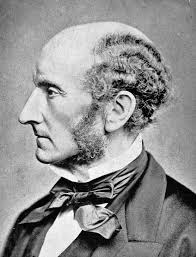
John Stuart Mill

This is where John Stuart Mill and his famed 19th- century book On Liberty (1859) enter the debate.  If Mill was alive at the time the stop WOKE act was being debated in the Florida legislature, he would have vigorously argued that there no moral justification for making illegal the woke speech cited in (1), (2) and (3).


Mill’s argument for this is set out in chapter 2 of On Liberty (“Liberty of Thought and Expression”). Without going into a lot of detail, here is one of Mill’s arguments against the suppression of speech:

"(T)he peculiar evil of silencing the expression of an opinion is that it is robbing the human race …If the opinion is right, they are deprived of the opportunity of exchanging error for truth; if wrong, they lose, what is almost as great a benefit, the clearer perception and livelier impression of truth produced by its collision with error."


Applying Mill’s argument to the (alleged) woke opinion #3 that “discrimination is an acceptable way to achieve diversity in education and business,” Mill’s first task would be to get the Florida legislature to admit that this opinion might be true.  Mill writes that “to deny this is to assume our own infallibility.” 


If it is admitted that no legislator is infallible, then it is possible that woke opinion #3 is true.  If it is found to be true, then those who believe that it is false will be "robbed" by the Woke act of the opportunity to “exchange error for truth.”  Although there are some politicians in our society who think it is a good thing to get others to believe a lie, this is usually good only for the politician and not for the populace at large.


On the other hand, if the woke opinion is false, then silencing the promulgation of the opinion and any debate about it ultimately robs the populace of the benefit gained from the “clearer perception and livelier impression” of the truth as it collides with the so-called erroneous woke opinion. This happens when we are forced to think critically and defend our ideas.


But none of this will happen if woke perspectives are silenced.  Instead, non-woke (conservative) political opinions will become dogma.  Mill writes that citizens will eventually forget the rational basis for the approved non-woke opinions and they will revert to “the manner of prejudice, …[thereby preventing] the growth of any real and heart-felt conviction from reason or personal experience.”


Perhaps reversion to "the manner of prejudice" about their non-woke political opinions is what Governor DeSantis and his Republican loyalists want for the people of Florida.  


Is this what Floridians want?  Is this what you want?

____________________________________

References:

"What is the DeSantis Stop woke Act?" https://thehill.com/changing-america/respect/diversity-inclusion/3608241-what-is-desantiss-stop-woke-act/  

"Federal Judge Temporarily Blocks DeSantis Stop Woke Law. https://www.politico.com/news/2022/08/18/federal-judge-temporarily-blocks-desantis-stop-woke-law-00052768

On Liberty. 1859. John Stuart Mill.  Hackett Classics edition (1978). Hackett Publishing Company. 1978.

Understanding John Stuart Mill: The Smart Student's Guide to Utilitarianism and On Liberty (2017).  Laurence Houlgate, Kindle edition (Amazon).


Sunday, December 19, 2021

PHILOSOPHY NOTES Part 7 How to Test Philosophical Beliefs and Theories


Subscribe to our monthly Philosophy Newsletter and get a Free copy of Understanding Philosophy: The Smart Student's Guide to Reading and Writing Philosophy


How to Test Philosophical Ideas and Theories

 Plato's Allegory of the Cave


1. Empirical and conceptual beliefs

Beliefs, whether true or false, have consequences.  Believing that she had the grades to get into college, Juanita applied and was admitted.  Believing that COVID-19 was a hoax, Fred took no precautions, tested positive, was hospitalized, and nearly died of the disease.

Philosophical beliefs also have consequences.  While enrolled in his first philosophy class, DeShawn came to believe the solipsist theory that there is no valid ground for believing in the existence of anything but one’s own mind.  As a consequence, he is anxious, miserable, and feels very alone.

His classmate Winifred came to believe that there are sound arguments for the determinist belief that no one has free will.  She is convinced that every act, every emotion, and every thought is caused by events in her past, events about which she has no knowledge or control.  As a consequence of this belief, she no longer feels guilty nor does she condemn anyone for immoral or criminal behavior.

There is a significant difference between the first set of beliefs (Juanita and Fred) and the second set (DeShawn and Winifred).  The first set of beliefs is empirical and verified or falsified by data gathered from observation and experience.  The second set of beliefs is philosophical and subject to verification or falsification only by logical  or conceptual analysis.

If we have doubts about the truth of Juanita’s belief that she has the grades to get into college, or the truth of Fred’s belief that COVID-19 is a hoax, our doubts can be tested by empirical means, for example, checking Juanita’s high school grades and looking into the scientific data about the existence and spread of the disease to test Fred’s belief.

But there are no empirical tests for confirming or falsifying the philosophical beliefs of DeShawn and Winifred. We can join the arguments for or against each belief but the arguments will not be settled by the presentation of empirically derived data.

No observation or experiment convinced DeShawn that there are no human minds other than his own.   No observation or experiment convinced Winifred that she and others never act of their own free will.

The reason why there are no empirically based experiments for these beliefs (theories) is that the beliefs themselves are not empirical.  When DeShawn reports that there are no minds other than his, he is telling us about the conclusion of a deductive argument.  When Winifred tells us that no one ever acts of their own free will, she tells us about her understanding of the relations between the concepts of action, free will, causation and control. 

To put this in the words of David Hume, the beliefs that have troublesome consequences for DeShawn and Winifred originate from the way they have related ideas (concepts) not the way they perceive matters of fact.

In previous blog posts, I have explained the difference between empirical (matter of fact) and conceptual claims.  For example, if your Social Science instructor asks you to find out whether widows want to remarry, you would do this by gathering and reporting the marital desires of a large number of widows. The result of your poll supports the probability not the certainty of the conclusion. (“90% of the widows polled want to remarry”).

By contrast, if your Philosophy instructor asks you to find out whether widows are women who have a deceased spouse, you would do this by thinking about the logical relation between the concepts of “widow,” “spouse,” and “deceased.”  Your finding can be tested, and the test supports the certainty not the probability of the relationship between these concepts.

The test is simple.  All you need to do is to ask whether a particular widow’s spouse is deceased  (“I know you are a widow but has your spouse died?”).  This is a closed question, answered by an examination of the concepts alone. It is not an open question, that is, it is not a question that would take you outside the concepts in the question into the world of widowed women, where your question would be taken as a joke or as a sign of your ignorance about the meaning of “widow.” 

2. How to test philosophical theories and beliefs 

Let us suppose that DeShawn got to the conclusion that there are no minds other than his own after reading Meditation II of Descartes’ Meditations on First Philosophy.  He is convinced that he cannot be certain of anything except the content (the ‘ideas’) of his own mind.[1] 

It is best to put this argument in the first person.

I cannot doubt that I exist and that I have frequent visual and other perceptions of what appear be other humans. But I can doubt the veracity of these perceptions. I do not know with certainty that what appears to me is happening in a dream or is a hallucination.   I only know with certainty that I am, I exist, and that I frequently have ideas (perceptions) that might or not be ideas of an external world. “There is nothing more easily and clearly apprehended than my own mind.” 

1. If I know a proposition with certainty, then I can easily and clearly apprehend it.

2. If I easily and clearly apprehend a proposition, then there are no circumstances under which the proposition is false.

3. There are circumstances under which the proposition “There are other minds” can be false (e.g. I might be dreaming or hallucinating).

4. Therefore, I do not easily and clearly apprehend the proposition “There are other minds.”

5. Therefore, I do not know with certainty that there are other minds.


Using the same set of concepts, we can turn the argument around and derive the conclusion that “I “know with certainty that I have a mind.”  There are no circumstances under which the propositions “I have a mind” like “I am, I exist” could be false.


Rene Descartes


Returning to Descartes’ negative conclusion “I do not know with certainty that there are other minds,” we should note that it derives entirely from a deductive argument.  He begins with a definition of certainty (premise 1), applies it to a proposition about the existence of other minds (in premise 3), and draws a negative conclusion. 

Both arguments (positive or negative) are deductive.  This means that if the premises are true, then the conclusion must be true.  Descartes is not telling us about matter-of-fact discoveries.  If this is what he is doing, then his conclusions would be probable, not certain.  Instead, he is linking concepts, step-by-step, to get to a conclusion that is certain: “I have a mind,” “I am a thinking being.”

There is another way to express the connection between the premises and the conclusion of a deductive argument.  If you present their relationship as a question, it would be a closed question.  For example, suppose we ask DeShawn “If premises (1), (2), (3), and (4) are true, then is it true that we do not know with certainty that there are other minds?”  The answer is “Yes.”  The answer is in the premises.  The question answers itself. 

Let us turn now to Winifred’s belief in Determinism.  The argument that convinced her is very short: 

1.  Every event has a cause

2.  My actions, desires, and thoughts are events.

3. Therefore, every act, desire, and thought has a cause (no acts are done without a cause).

4. An act done from an actor’s free will is an act done without a cause.

5. Therefore, no act, desire, or thought can be done of the actor’s free will.


Winifred asks the question: “I believe that everything I do is determined by prior events, but is it possible that some of my actions are done of my own free will?”  The answer is “No,” not because empirical research of human behavior shows that some human acts are done of their own free will but because the question is closed.  The argument is valid if we assume the truth of premises (1), (2), (3), and (4). 

Let’s see what happens if we take the advice of Thomas Hobbes (Leviathan) and define “free will” by the way these words are used in ordinary language to describe situations we confront in everyday life.  For example, “You are now free to go,” says the jailer as he opens the jail door.  Or “She is doing it of her own free will,” says the teacher who watches in amazement as his young student takes a broom and cleans the hallway floor without being told to do this. 

In the jailer example, the words “free to go” mean that there is no impediment to leaving the jail.  In the teacher example, the words “of her own free will” mean that no one forced the student to sweep the floor.

The Determinist philosopher dismisses these cases and insists that doing an act of one’s own free will can only mean “actions uncaused (undetermined) by prior events.” This is what makes Winifred’s question closed.

But the Determinist definition also makes the argument empty.  It is not possible that human actions are free because only one meaning of “free will” is used in the Determinist argument. If it is acknowledged that free will has alternate meanings (“no impediment,” or “not forced”), then there is plenty of empirical data showing that we often act of our own free will.

3. A final word about the future of philosophy. 

Compared to the long history of discoveries in science, it is almost as if thinking about a philosophical problem is like thinking about your next move in a game of chess.  The chess move has little or no popular consequence.  Philosophical problems are fun to think about not because they are consequential but because trying to solve them is an escape.  We temporarily forget about troubles at home, school or work, and of course, we say to ourselves, “Hard thinking is good for the health of my brain.”

If you get serious about the study of this concept-game called “philosophy,” you might change your major, go to law school and use the critical thinking skills you acquired in the study of philosophy as a high paid corporate attorney.  Or you might go on to graduate school, get a doctorate in philosophy, take vows of poverty, and eventually get a teaching job.[2]  

Ludwig Wittgenstein

The 20th century philosopher Ludwig Wittgenstein had a quite different evaluation of philosophy.  The problems of philosophy are like the complaints of a hypochondriac. They exist only in the minds of the philosophers who created them (my words, not his). 

Philosophical problems are bogus. Wittgenstein writes that “a philosophical problem has the form: ‘I don’t know my way about’” (Philosophical Investigations 123), and  the real job of the philosopher is “to show the fly the way out of the fly bottle. (PI 309)." 

For example, suppose that the fly is the philosopher who believes that there is a problem about the existence of free will.  The fly bottle is the network of concepts that entrap the philosopher and make her think that there is a problem when in fact there is none.  The consequential work that philosophers can do is convince the freewill debaters to stop banging their heads against the walls of the fly bottle.  They can do this by disentangling concepts in a way that shows there is no problem at all.  When this is done, the confused philosopher, like the fly, can now fly out of the bottle. “And this simply means that the philosophical problems should completely disappear” (PI, 133). 

And that, my philosophy friend, is the end of philosophy as our professors understood it.   If Wittgenstein is right, then the only task of the philosopher is to make traditional philosophical problems disappear.

Is Wittgenstein right? It has been 68 years since he predicted the disappearance of philosophy and it is still going strong. It would seem that philosophers have no more to fear about the demise of their profession than fear itself. 

In the next episode of Philosophy Notes, I will give some examples of philosophical problems that Wittgenstein had in mind when he said they are trapping some philosophers in the fly bottle when they need not be in there at all. 


_________________________________________________

Descartes, Rene.  1641. Meditations on First Philosophy.  Many editions.

Hobbes, Thomas. 1651.  Leviathan.  Many editions.

Houlgate, Laurence. 2018. Understanding Rene Descartes: The Smart Student’s Guide to Meditations on First Philosophy.  Amazon Kindle.

_______________.  2017. Understanding Thomas Hobbes: The Smart Student’s Guide to Leviathan.  Amazon Kindle.

_______________,  2019. Understanding David Hume: The Smart Student’s Guide to Dialogues Concerning Natural Religion and Other Essays.  Amazon Kindle.

Hume, David.  1739-1740.  Treatise Concerning Human Nature. Many editions.

School of Thought. www.schoolofthought.org

Wittgenstein, Ludwig. Philosophical Investigations. 1953, G.E.M. Anscombe and R. Rhees (eds.), G.E.M. Anscombe (trans.), Oxford: Blackwell.


[1] See my study guide on Descartes’ Meditations for critical discussion of the method of doubt.  Laurence Houlgate, Understanding Rene Descartes: The Smart Student’s Guide to the Meditations on First Philosophy (https://www.amazon.com/dp/B08MDJTW2K ).

[2] Average pay nationwide for philosophy majors after graduation is about $29,000 per year, but that varies from one college to another.  The annual pay for philosophy majors with a B.A. degree from the University of Pennsylvania is about $68,000, and the pay from a B.A. in philosophy from the University of Southern California is about $44.000, See more data at https://www.collegefactual.com/majors/philosophy-and-religious-studies/philosophy/rankings/highest-paid-grads/