Showing posts with label Corona Virus. Show all posts

Wednesday, October 6, 2021

John Stuart Mill and Contemporary Disputes About COVID-19 Vaccinations

Subscribe to our monthly Philosophy Newsletter and get a Free copy of Understanding Philosophy: The Smart Student's Guide to Reading and Writing Philosophy

 Vaccines, Liberty and John Stuart Mill's Harm Principle

Unless you have been living on Mars, you may have noticed the two ongoing political disputes that give opposing answers to questions about the limits of individual liberty.  The first question is whether social media outlets (like Facebook) should be legally required to prohibit posts that give false or misleading information about vaccines developed to immunize the human body from COVUD-19 The second question is about requiring certain groups of people to be vaccinated, for example, teachers, college students, school children, government employees, workers in businesses with more than 25 employees.

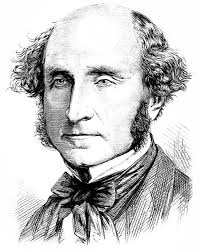
   John Stuart Mill (1806-1873) was an advocate of an ethical theory called Utilitarianism.  The theory said that moral rules should be grounded in utility, meaning that the rules should require conduct that promotes the greatest happiness for the greatest number.  Thus, we have rules requiring that people tell the truth and keep their promises because conformity to these rules in society promotes the greatest happiness.  This does not mean that the rules are absolute.  Of course, there will be exceptions, but the exceptions must be tested by utility.  You would be justified in telling a lie to a crazed man holding a knife or gun if he asked you where his former wife was hiding.  

    In his book On Liberty, Mill promoted a utilitarian-based principle called "harm-to-others".  Mill distinguished between conduct that causes harm only to oneself and conduct that causes (or threatens to cause) harm to others.  If a lonely alcoholic drinks only in his home then he harms only himself. If he drives a car and hits another occupied car while drunk, injuring himself and the people inside the car, then his conduct causes harm not only to himself but to others.

   The harm principle implies that he has a right to get drunk in his home but only if he stays there and does not threaten harm to others.  Although the drunken man might be unhappy because he cannot drive while drunk, the happiness of sober drivers is far greater than his unhappiness. 

   The harm principle easily applies to the details of the COVID-19 vaccine dispute.  Unvaccinated people who refuse vaccination threaten the health and even the life of others if they insist on leaving their house and mingling with others in large crowds where there might be unvaccinated or vulnerable vaccinated people, especially the elderly and very young children.  The latter persons have a right not to be harmed.  The unvaccinated persons have no utilitarian right to harm them or put them at risk of being harmed.  They can risk their own death by refusing vaccination but they cannot risk causing others to die or become ill.

    The harm principle can also be used to settle the question of whether children should be required to wear face masks or to get vaccinated as a condition of going to in-person classrooms.  Parents have no moral or legal right to endanger their own children nor do they have the right to endanger the health of other children in the classroom by sending them to school without a mask.  The harm-to-others principle trumps parental rights. If parents must get their children vaccinated for measles and mumps, then there is a similar good reason why they should be vaccinated for covid-19. The COVID-19 virus causes as much or more damage than measles and mumps.

    This takes us to the second question that  Mill implicitly answers in On Liberty.  It is about freedom of speech.  Should social media posts about the safety of vaccinations for COVID-19 be prohibited by law if the posts are false or misleading?  For example, a rumor on social media was recently spread saying that the vaccine can affect a woman's fertility.(https://www.hopkinsmedicine.org/health/conditions-and-diseases/coronavirus/covid-19-vaccines-myth-versus-fact).  Other rumors have claimed that the vaccine will kill all those who take it!  Should rumors such as these be barred from publication?

    In On Liberty, Mill argues that the expression of an opinion is justifiably prohibited by law only if the expression causes or would cause harm to others.  Examples of such expressions are libel, slander, and incitement to riot.  Examples of opinions that are false, misleading, or unsupported by evidence but cause no harm to others who hear or read these opinions cannot be justifiably suppressed.

    It might be objected that people who hear false opinions sometimes take them seriously and act on them in a way that causes them harm.  For example, President Biden recently complained that thousands of Americans have died of COVID-19 because they had believed and acted on the false opinion that the vaccines offered to prevent infection would kill them.  Is this a sufficient reason for prohibiting social media posts that spread lies about getting vaccinated?

   The objection fails to take into account a distinction between immediate and mediate harm.  If person A slanders the reputation of person B, then B has been immediately harmed by A's slanderous speech.  B had no control over the slander.   But if A writes a social media post saying that  anti-COVID vaccines will kill people, then no particular person, including B, has been targeted by A.  Second, if B reads and believes A's post, refuses to take the vaccine, eventually contracts COVID-19 and dies, B is harmed but not immediately harmed.  The harm is mediate because B voluntarily acted on A's opinion.  B was presented with A's opinion and it was  up to B to determine whether it was true or false.  To put it another way, the causal links between A’s social media post and B’s death was B’s accepting as true the false claim that the vaccine would kill him, and B’s subsequent refusal to be vaccinated.  Although we might say “But for A’s lie, B would not have died,” we can also say “But for believing A’s lie, B would not have died.”  Third, if B fails to investigate the veracity of the opinion and acts on it in a way that leads to his death, then we would not conclude that "A killed him," nor would we conclude that A killed all those who read his social media post, acted on it and eventually died of the virus.         

    This leads to Mill's famous remark that "the peculiar evil of silencing of an opinion is that it is robbing the human race."  The robbery Mill has in mind is being deprived of the opportunity to "exchange error for truth."  We cannot just assume that what we think about the safety of vaccines is true and what others think must be false.  We need to hear the opinions of others, no matter how ridiculous these opinions might sound to us.  For all we know, there is at least a logical possibility that they might be right!  On the other hand, if their opinions are wrong, then we lose "what is almost as great a benefit, the clearer perception and livelier impression of truth produced by its collision with error."  

    Mill has given us the utilitarian task of balancing good and bad consequences. The mediate but good consequences of prohibiting posts of false and misleading opinions about the safety of anti-COVID vaccines is that more people will take the vaccine, the spread of the disease will be limited, and fewer people will die.  The bad consequence is that such prohibitions on speech will damage our "mental well-being" and "self-improvement" by being robbed of the opportunity to challenge opinions that the silencers of speech think might be false.  Mill would warn us that if we silence speech in cases like this (anti-vaccination rants on social media), then this opens the door to those who would silence any false or misleading speech that might lead to mediate harm.

For more about Mill's writings, read his books Utilitarianism and On Liberty.  And if you need help reading these books, read my study guide: Understanding John Stuart Mill: The Smart Student's Guide to Utilitarianism and On Liberty.

Thursday, May 7, 2020

Governor Andrew Cuomo, the Corona Virus and the Value of Human Life


Subscribe to our monthly Philosophy Newsletter and get a Free copy of Understanding Philosophy: The Smart Student's Guide to Reading and Writing Philosophy

Does Human Life Have a Price?


"The faster we reopen, the lower the economic cost, but the higher the human cost. Because of the more lives lost. That my friends, is the decision we are really making." – Andrew Cuomo

Andrew Cuomo

In his daily briefing of May 4, 2020, New York Governor Andrew Cuomo pointed to recent projection models that had put the country's death toll from COVID-19 at 60,000.  However, projection models have now moved that figure up to 134,000.  Cuomo explained that rising mobility in most states as well as the easing of social distancing measures expected in 31 states by May 11th indicates a growing contact with the consequence that people will continue to transmit the virus at high rates.

Cuomo said “that is a very nice way of saying when you accelerate the reopening you will have more people coming in contact with other people. You are relaxing social distancing. The more people in contact with other people, the higher the infection rate of the spread of the virus. The more people who could get infected, the more people who die. We know that."

Governor Cuomo also drew an important moral conclusion from these facts when he asked and answered the following question.  "How much is a human life worth? That is the real discussion that no one is admitting, openly or freely.” But he said, we should make this admission: “To me, I say the cost of a human life is priceless. Period .”

This being said, it seems obvious that the implication of the governor’s words is that it would be morally wrong for those who have political power to remove or relax the current restrictions to stay at home.  All governors ought to continue their earlier orders to citizens that they should minimize their mobility by staying home until the infection rates significantly decrease.

But not every state governor nor the president of the United States agrees with Cuomo.  Consider the following quotes.  President Trump said “There’ll be more death” as we resume economic activity but "we have to get our country back” 

Chris Christy, the former governor of New Jersey said that “we have to let people get back to work” even if this has the consequence of increasing the number of coronavirus-19 infections and deaths. 

Christy’s remarks echoed an earlier statement by former Texas Lt. Governor Dan Patrick who said that “there are more important things than living, and that’s saving this country for my children and my grandchildren and saving this country for all of us.”

Christy went on to draw an analogy between the “significant death” so far caused by the virus and the heavy loss of life during the world wars. “We sent our young men during World War 2 over to Europe, out to the Pacific, knowing that many of them would not come home alive. And we decided to make that sacrifice because what we were standing up for was the American way of life. In the very same way now, we have to stand up for the American way of life.”  Christy assumes that those Americans who die from the virus during an early reopening of the economy are making a justifiable “sacrifice” for their country similar to that of a WW2 American soldier who sacrificed his life battling the enemy.

Implicit in all of these remarks is a centuries-old debate between several classical philosophers, notably Plato, John Locke, Immanuel Kant and John Stuart Mill.  The foundations of the debate can be cast in different ways, but philosophers refer to it  as the familiar debate between utilitarian and deontological ethical theories. 

Utilitarian theories are forward-looking.  They argue that an action, law or policy is morally wrong only if it produces more bad consequences than good, where the word “good” means “pleasure or happiness” and “bad” means “pain or misery.”  For example, if you break a promise to repay a loan to a wealthy person because you need the money to pay for food and shelter, a utilitarian would say that this act is not morally wrong: the good consequences of breaking the promise (food and shelter) outweigh the bad (no food or shelter).  By analogy, if the governors remove their stay-at-home orders and allow retail stores, and public spaces (parks, beaches) to reopen, then this will relieve an amount of human suffering and despair for millions of people that far outweighs the despair of an increase of thousands of deaths due to the virus.

Deontological theories  are backward looking.  They assert that an act, law or policy is morally wrong because it is inherently wrong, violates a moral rule or the natural rights of others. Breaking a promise is morally wrong not because of the consequences of breaking promise, but because breaking the promise treats the one to whom you broke the promise as a commodity, as a mere means to an end.  But people are not commodities.  They are ends-in-themselves, to be treated “as persons,” not “as objects.”  They have fundamental rights that cannot be weighed or “trumped” (not a pun) by the consequences of protecting these rights.. 

Returning to the debate between the governors about the wisdom of an early restoration of the economy, Trump, Christy and Patrick are clearly promoting utilitarian arguments by weighing the good and bad consequences of reopening the economy: getting people back to work and the loss of human life. They believe that when this calculation is done, the good consequences will far outweigh the bad, that is, there will be more overall happiness than misery in the general population by reopening the economy. 

Governor Cuomo rejects the utilitarian calculus, not because the calculation is wrong but because it is irrelevant.  If human life is “priceless” then there is nothing to weigh. The value of human life is immeasurable.  Even if it is true that there would be more overall happiness than misery by reopening the economy while the infection rate is still high, the fact that there would be more loss of life is the only fact that is morally relevant.   

Although Cuomo did not mention former governor Christy’s “sacrifice” analogy during his daily briefing, it seems clear that he would have rejected it as irrelevant.

Here is why. The sacrifice of which Christy speaks is not the sacrifice of those who are battling the virus but the unwanted sacrifice of those whose death is a side effect of the battle.  It is similar to a wartime bombing of an area in which there are non-combatants who will die along with the intended enemy combatants. 

But this is where Christy’s analogy completely breaks down.  Restoring the economy is not the same as dropping a bomb.  The bomb will damage the enemy and kill non-combatants.  Restoring the economy will not only not stop the spread of the virus, it will help the spread.  

Finally, there is an important distinction between self-sacrifice and sacrifice by others.  The thousands who have died from the corona virus were not sacrificing themselves. And those thousands who everyone predicts will die during the premature opening of the economy are not asking to be sacrificed.  Instead, they are being sacrificed by others, notably by those politicians who are more interested in restoring the economy than they are in saving lives.  And this takes us back to the utilitarian dilemma and Andrew Cuomo’s powerful objection about the priceless value of human life.

Postscript.  13 May 2020  
Please follow this link to an article by an eminent scientist about the dangers of opening the economy too quickly and too soon.  Her remarks enforce the comments made by Dr. Fauci at yesterday's U.S. Senate hearings.  https://www.erinbromage.com/post/the-risks-know-them-avoid-them 

[For students. To learn more about utilitarian and deontological ethics, see my philosophy study guides:  Understanding John Stuart Mill and Understanding Immanuel Kant.]